Sport & Action · 7 min read
Commercial sport photography: briefing a shoot that runs in the field
Sport briefs fail for the same reason most action photography goes wrong: the client briefs an outcome — "athletes in motion, brand visible, cinematic" — and the crew plans for a controlled studio set. The subject doesn't wait. Here's how to brief a sport shoot so you get what you actually need.
After more than twenty years shooting everything from alpine endurance athletes and mountain bikers mid-air to open-water triathletes at dawn and fire crews training under live conditions, the problems we see in briefs repeat. The fix isn't more kit — it's clearer thinking before the shoot day starts.
What sport photography for brands actually is
There are two types of commercial sport shoots and they require completely different approaches. The first is athlete-as-talent — a controlled production where a signed athlete performs to camera on a known course or set, with full lighting, a camera team and multiple takes. The second is authentic-moment photography — shot during a real competition, real training or real extreme conditions where the action is uncontrolled and your single chance to get the frame.
Most briefs want the feel of the second with the safety of the first. That's actually achievable, but only if you design the location and the moment in advance rather than hoping to capture something spontaneous. We call this controlled authentic — structured enough to be repeatable, raw enough to look real.
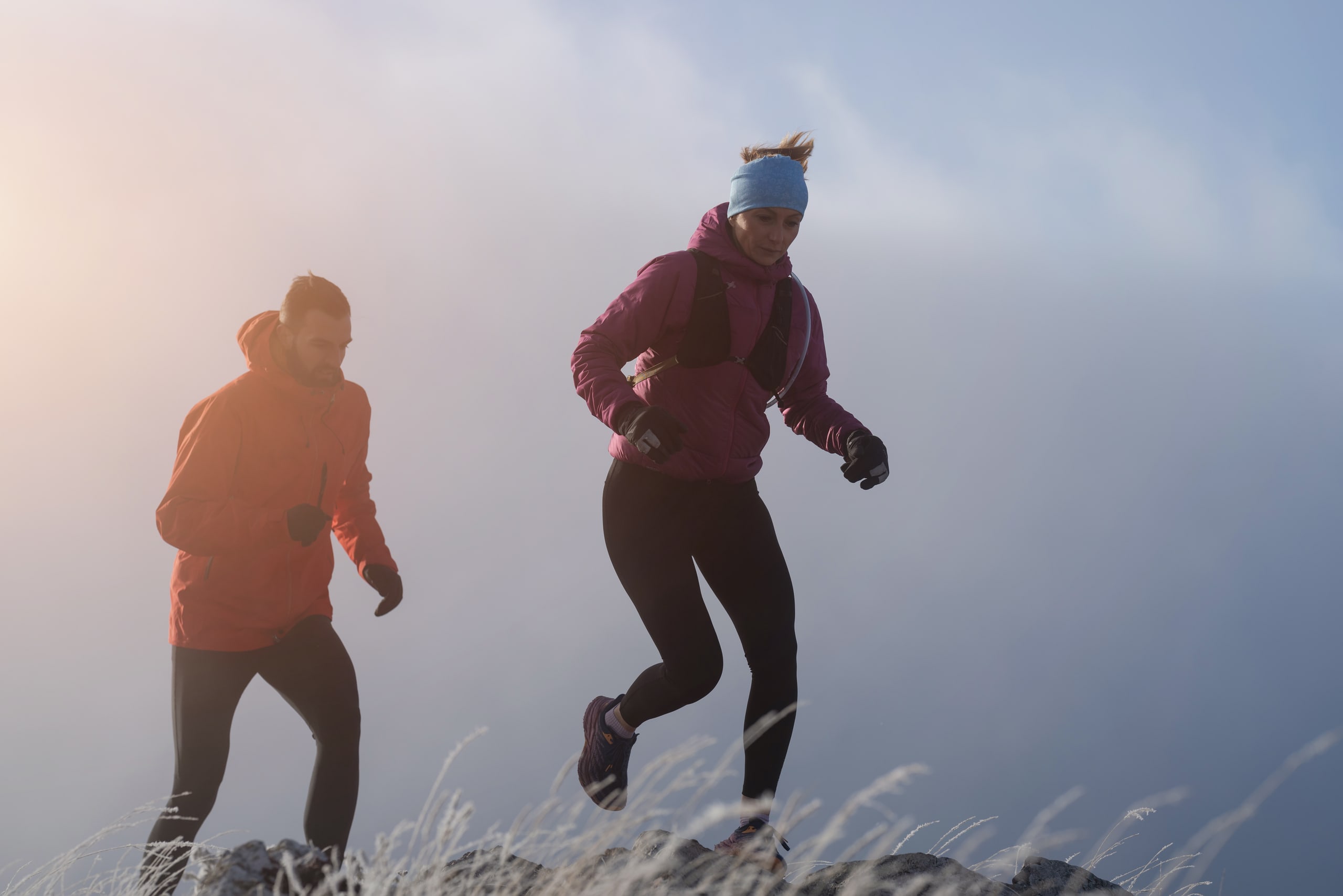
Trail running at dawn in mountain mist — a controlled authentic setup: athlete briefed, route scouted, timing exact.
The brief questions that actually matter
Before we can plan the kit, crew or location, we need answers to these:
- What is the athlete doing, exactly? "Mountain biking" is not a brief. "A 29er hitting a specific tabletop jump at roughly 40km/h, framed left-to-right so the logo faces camera at peak height" is a brief.
- What's the background? If you need the brand environment visible, that restricts where the athlete can be. If you need sky, you need an elevated camera or a jump.
- Is this licensing stock or campaign? Stock imagery means broad releases and composition flexibility. A campaign visual for a specific market has entirely different usage constraints — and therefore different model agreements.
- What's the cut? Are these stills only, or do you also need motion? Motion from the same shoot day costs almost nothing incrementally if the camera team is already on location.
- What's the weather envelope? We can shoot in hard rain, mist, direct sun or flat overcast — but each of these requires different kit choices made before we leave the studio.
Kit for moving subjects: what makes the difference
A studio strobe on a battery pack changes what's possible outdoors without a power source. For sport shoots specifically, Profoto on batteries means we can place a key light on a slope, a ridgeline or a riverbank and fill the subject even at golden hour or in open shade — without a generator and without running cable. That's not a marginal advantage for location shooting, it's the difference between a shot that's possible and one that isn't.
For fast-moving subjects — a mountain biker clearing a jump, a swimmer coming off the wall, a runner cresting a hill — the camera choice matters less than the timing discipline. We use continuous servo AF with a burst sequence and a tight shutter window, but the technical work is in scouting the exact frame we want before the athlete runs it, not reacting while it happens.
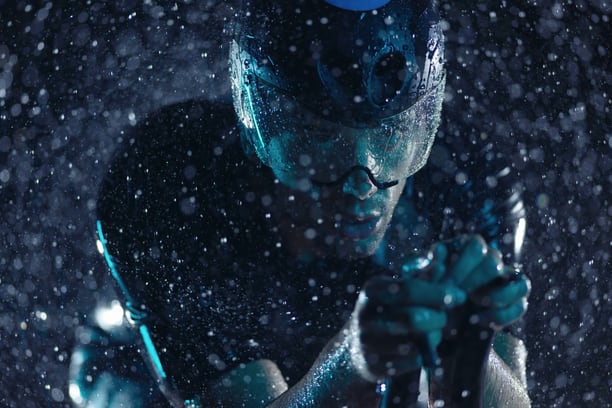
Peak moment on a tabletop jump. Pre-scouted angle, burst sequence, exact shutter speed dialled before the athlete ran the line.
Why location scouts aren't optional for sport briefs
On a controlled studio shoot, you can adjust. On a sport shoot at 2,000 metres above sea level in a window between weather, you can't send a crew back for another run. Pre-production on a sport brief means visiting the location, walking the athlete's route, identifying the exact frames we want to achieve, and flagging the ones that require a different light condition or a different camera position. We don't do scout-free sport shoots — the output quality isn't there and the day becomes a recovery operation rather than a production.
Stills and motion from the same day
If you're briefing a sport shoot and you're not also getting motion, you're leaving deliverables on the table. A single production day with a two-camera setup — one shooting stills, one shooting 4K motion — gives you an entirely different volume of output for a fraction more cost. For brands running social, display and OOH from the same campaign, this matters: the still for the poster, the clip for the story, the longer cut for YouTube, all from one athlete, one location, one brief.
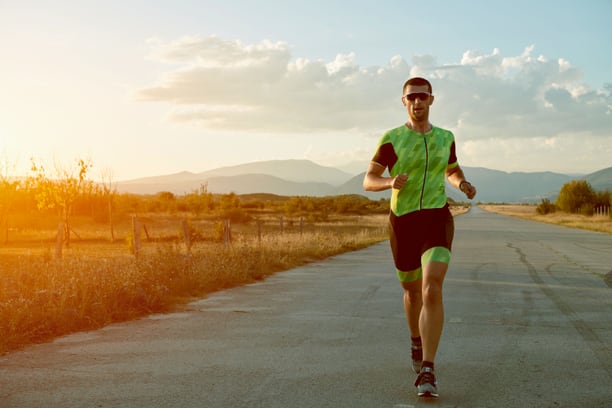
Open water triathlon, competition day — authentic moment capture, pre-planned position, fast prime in manual exposure.
Have a sport or action brief that needs location production?
Brief the shootRelated reading: Sport & action photography service → · Production services → · Case study: sport lifestyle campaign →